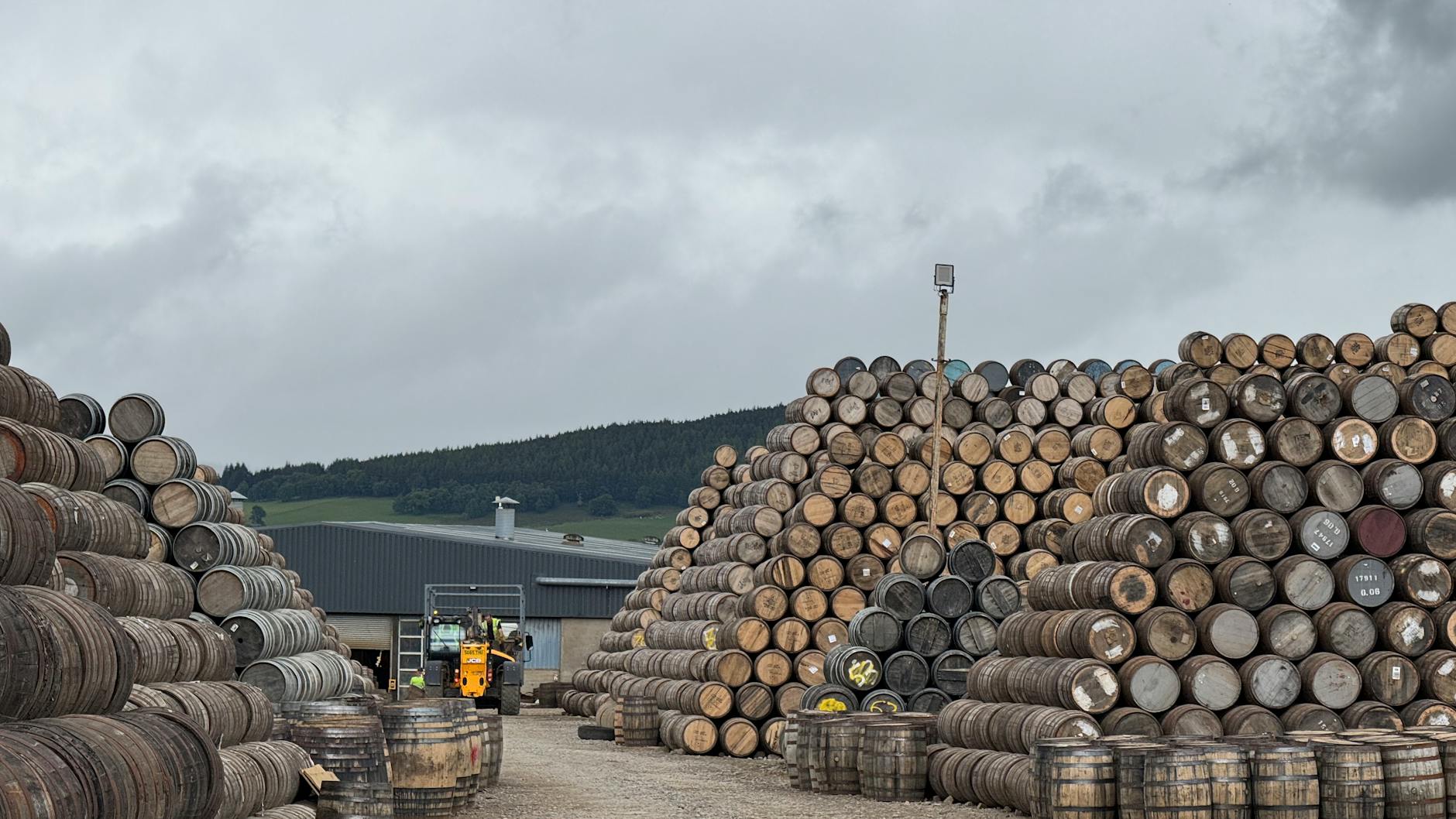
Trump's removal of US tariffs on Scotch and Irish whiskey is a structural demand catalyst for whisky cask investors. With the US market reopening fully, aged cask valuations are expected to rise. Investors positioned in premium Scotch casks stand to benefit most.
TL;DR: Trump's removal of tariffs on Scotch and Irish whiskey imports is a structural market shift that reduces supply friction and could accelerate institutional interest in whisky cask investment. Investors who positioned early in aged Scotch casks stand to benefit most from the resulting demand surge and price appreciation.
Whisky Cask Investment Gets a Tariff-Driven Tailwind
Whisky cask investment has delivered average annual returns of between 8% and 16% over the past decade, according to data tracked by specialist brokers and cask trading platforms. The Knight Frank Luxury Investment Index has consistently ranked rare whisky among the top-performing alternative assets, with a reported 373% appreciation over the ten years to 2023. Now, a major geopolitical development is add fresh momentum: US President Donald Trump has lifted tariffs on Scotch and Irish whiskey imports following a state visit by King Charles, removing a significant trade barrier that had been suppressing export volumes and dampening investor sentiment across the sector.
The tariffs — which at their peak imposed a 25% levy on single malt Scotch entering the United States — had cost the Scottish whisky industry an estimated £600 million in lost export revenue since they were first introduced in 2019. The US is the single largest export market for Scotch whisky by value, accounting for over £1 billion in annual sales in a strong year. With that friction now removed, distilleries are expected to accelerate production and distribution pipelines, and secondary market demand for aged casks is widely anticipated to follow.
Why This Matters for Cask Investors Right Now
The tariff removal is not simply good news for distillers — it is a direct supply and demand signal for anyone holding whisky casks as an investment asset. When export markets expand, the appetite for aged, bottling-ready stock increases sharply. Casks that have been maturing quietly in Scottish or Irish warehouses become more commercially attractive to blenders, independent bottlers, and brand owners seeking to meet revived American demand. That translates into upward pressure on cask valuations at the point of sale or auction.
Consider the numbers. A first-fill Sherry butt of Speyside single malt purchased at new-make prices in 2015 for approximately £2,500 to £3,500 could today command £18,000 to £30,000 or more at auction, depending on distillery provenance and cask condition — a return profile that comfortably outpaces most traditional fixed-income instruments over the same period. The Scotch Whisky Association reported that total Scotch exports reached £5.6 billion in 2022 before the tariff drag began to bite. A return to those volumes, now supported by a more open US market, sets a constructive floor for cask asset values.
- 10-year appreciation (rare whisky index): +373% to 2023
- Estimated tariff cost to Scotch exports: £600 million since 2019
- US market value for Scotch (peak year): over £1 billion annually
- Illustrative cask return (2015–2025, Speyside first-fill): approximately 600–750% on cost
- Scotch Whisky Association total export value (2022): £5.6 billion
Scarcity Dynamics and the Long Production Cycle
What makes whisky casks structurally compelling as an investment is the irreversible nature of time. A 12-year-old single malt cannot be manufactured on demand — it requires 12 years of warehouse space, evaporation loss (the so-called "angel's share" of roughly 2% per annum), and careful cask management. This means that the supply of aged, premium casks is finite and shrinking relative to growing global demand, particularly from Asian markets where appetite for aged Scotch has grown aggressively over the past decade. The US tariff removal adds a third major demand vector — North America — back into the equation at full strength.
Distilleries cannot simply produce more 18-year-old whisky to meet a surge in demand today. The casks that will satisfy that demand were filled in 2007. Investors who hold well-provenanced casks from respected distilleries are therefore sitting on assets with genuine scarcity value — a characteristic that is increasingly rare in a world of replicable financial instruments. The tariff news accelerates a trend that was already in motion: institutional and high-net-worth capital rotating into tangible, time-locked assets with verifiable provenance and a liquid exit market.
Investment Takeaway: Position Before the Repricing
For investors evaluating alternative asset allocation, the Trump tariff reversal is a catalyst worth acting on before the broader market reprices cask inventory upward. The window between a macro signal and its full absorption into asset valuations is typically narrow. Distilleries and brokers with existing cask inventory will adjust asking prices as export order books refill and bottling demand recovers. Investors who move during this transitional period — before the demand surge fully materialises in cask auction hammer prices — are best positioned to capture the appreciation cycle from its early stages.
The most defensible positions are in aged single malt casks from established Speyside, Highland, or Islay distilleries with strong brand recognition in the US market — names that American importers and retailers will specifically seek out as tariff-free sourcing resumes. First-fill ex-Bourbon and ex-Sherry casks aged between 10 and 20 years represent the sweet spot between current commercial demand and long-term collectibility. Investors should conduct due diligence on cask provenance, warehouse certification, and exit liquidity options before committing capital, and work with regulated specialists who can provide independent valuations and secure storage documentation.
Frequently Asked Questions
How do whisky cask investments generate returns?
Whisky casks appreciate in value as the spirit matures, gains complexity, and becomes scarcer due to evaporation. Investors typically buy casks at new-make or early-maturation prices and sell them years later to blenders, bottlers, or at specialist auction — capturing the difference as their return. The longer the maturation period and the more prestigious the distillery, the higher the potential exit value.
What impact does the US tariff removal have on cask prices?
The removal of US import tariffs on Scotch and Irish whiskey increases demand from the world's largest whisky export market by value. This raises commercial appetite for aged, bottling-ready cask stock, which in turn supports higher valuations for investors holding mature casks. The effect is likely to be most pronounced for distilleries with strong US brand recognition and distribution networks.
What are the risks of investing in whisky casks?
Key risks include illiquidity (casks are not traded on public exchanges), valuation opacity (prices depend on specialist appraisers), storage and insurance costs, and regulatory changes. Investors should also be aware of the unregulated nature of parts of the market and should only work with reputable, verifiable brokers who offer transparent provenance documentation and secure bonded warehouse storage.
How much capital is typically required to invest in a whisky cask?
Entry-level casks from younger or lesser-known distilleries can be acquired for as little as £2,000 to £5,000. Premium casks from sought-after Scotch distilleries with significant age statements typically range from £10,000 to £50,000 or more. Investors should treat whisky casks as a medium-to-long-term hold of at least five years to allow meaningful appreciation and to justify transaction and storage costs.
Is whisky cask investment regulated?
In most jurisdictions, including the UK and Singapore, whisky cask investment is not directly regulated as a financial product, which means investors do not have the same statutory protections as they would with FCA-regulated instruments. This makes due diligence on the broker or platform critical. Reputable specialists will provide full provenance documentation, bonded warehouse receipts, and independent valuation reports.
💼 Interested in alternative asset investment? Speak to the team at Whisky Cask Club — Singapore's leading whisky cask investment specialists.
💼 Interested in alternative asset investment? Speak to the team at Whisky Cask Club — Singapore's leading whisky cask investment specialists.