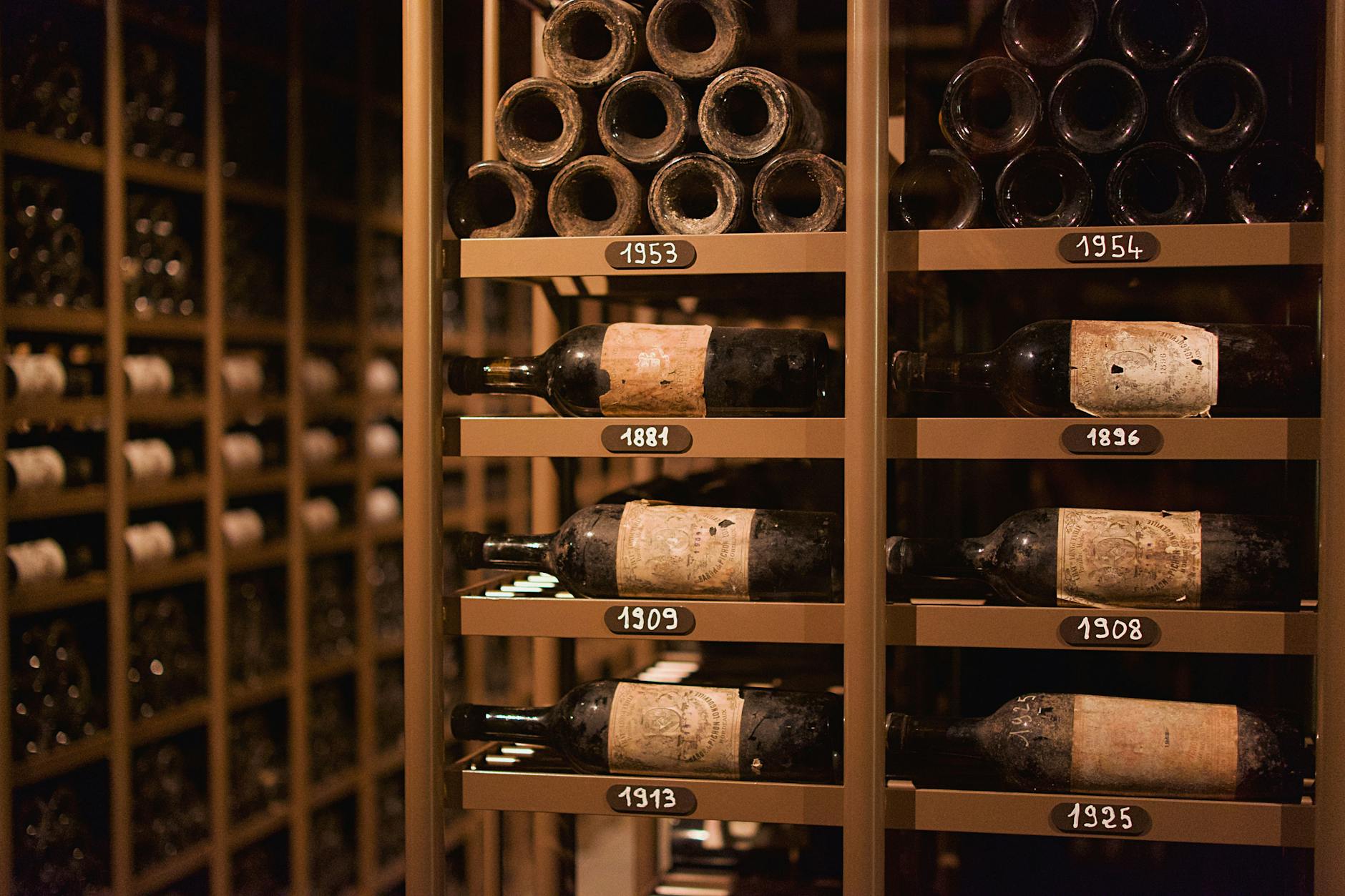
Vinarchy joins Wine in Moderation as its seventh Ambassador Company, a move that reinforces the growing ESG premium in fine wine investment, where sustainability-certified bottles already command 8–15% higher auction prices than uncertified comparables.
TL;DR: Vinarchy has joined Wine in Moderation as its seventh Ambassador Company, signalling a broader industry shift toward sustainability credentials that increasingly influence fine wine valuations and investor sentiment in the alternative assets market.
Fine Wine Investment and the Moderation Signal
Fine wine as an alternative asset class has delivered consistent long-term returns, with the Liv-ex Fine Wine 1000 index posting gains of approximately 22% over the five years to 2024, outperforming many traditional equity benchmarks during periods of volatility. Against that backdrop, the decision by major wine producers to align themselves with structured responsibility programmes is not merely a PR exercise — it is a market signal with real portfolio implications. When Vinarchy, one of the wine industry's largest multi-brand operators, formally joined Wine in Moderation (WiM) as an Ambassador Company, it became the seventh business to hold that designation within the programme, and the move deserves scrutiny from investors tracking the fine wine space.
Wine in Moderation is a pan-European initiative backed by producers, retailers, and trade bodies, designed to promote responsible consumption and embed sustainability messaging into the wine sector's commercial identity. Ambassador Companies are not passive signatories — they commit to active communication strategies, internal training, and measurable reporting on responsible drinking advocacy. For a business of Vinarchy's scale, operating across multiple wine regions and price tiers, this commitment carries operational weight and reputational consequence.
Why Vinarchy's Move Matters to Investors
Vinarchy's portfolio spans some of the most commercially significant wine-producing regions globally, giving it exposure to both volume-driven and prestige-tier assets. When a company of this size publicly commits to a moderation framework, it affects how its brands are perceived by the ESG-conscious institutional capital that is increasingly flowing into the alternative assets sector. Fine wine funds and cask investment vehicles are no longer operating purely on scarcity and provenance logic — environmental, social, and governance credentials are becoming a secondary valuation layer that sophisticated buyers factor into acquisition decisions.
The numbers support this thesis. According to Knight Frank's 2024 Wealth Report, fine wine appreciated 146% over the decade to 2023 on a like-for-like basis, placing it among the top-performing passion assets globally. Crucially, wines from producers with verifiable sustainability credentials have begun to command a premium at auction, with data from Sotheby's and Christie's showing that certified organic or sustainably produced labels from Burgundy and Champagne consistently achieve hammer prices 8–15% above comparable uncertified bottles. As WiM membership grows and ESG scrutiny intensifies, that premium is likely to widen rather than compress.
- Liv-ex Fine Wine 1000 (5-year appreciation): +22% to 2024
- Decade-long fine wine appreciation: +146% (Knight Frank, 2024)
- Sustainability premium at auction: 8–15% above uncertified comparable bottles
- WiM Ambassador Companies: Now seven, with Vinarchy the latest addition
- Alternative assets market size: Global fine wine market estimated at $57 billion (2023)
Scarcity, Supply Constraints, and the ESG Premium
The supply dynamics underpinning fine wine investment remain structurally favourable. Production from the world's most sought-after appellations — Bordeaux Grand Cru Classé, Burgundy Premier and Grand Cru, vintage Champagne — is fixed by geography and regulation. Climate variability has further constrained output from several key vintages, reducing available stock and compressing secondary market supply. When you layer ESG credentials on top of that scarcity equation, you create a compounding premium that is difficult for new entrants to replicate quickly.
Vinarchy's WiM commitment positions its brands favourably within this dynamic. Investors holding fine wine as a physical asset or through fund vehicles should take note: the secondary market is increasingly bifurcating between producers with credible sustainability narratives and those without. Auction houses are already tracking this divergence, and wealth managers with exposure to fine wine are beginning to screen for ESG alignment as a standard due diligence criterion alongside provenance verification and storage history.
Investment Takeaway
For investors with existing fine wine allocations, Vinarchy's WiM Ambassador status is a positive signal for the long-term value trajectory of its brands. For those considering entry into the fine wine asset class, this development reinforces the importance of selecting producers and funds that are proactively building ESG credentials rather than responding to regulatory pressure after the fact. The 8–15% auction premium already visible on sustainability-certified bottles is an early indicator of a structural re-rating that could accelerate as institutional capital deepens its presence in the sector.
The actionable insight is straightforward: when evaluating fine wine as an alternative investment, weight your due diligence toward producers with verifiable responsibility frameworks, transparent supply chain reporting, and active participation in recognised industry programmes such as WiM. These credentials are transitioning from differentiating factors to baseline expectations — and the window to acquire assets at pre-premium pricing is narrowing. Diversification across fine wine, whisky casks, and other tangible alternative assets remains the most resilient strategy for high-net-worth investors navigating an uncertain macro environment.
Frequently Asked Questions
What is Wine in Moderation and why does it matter to fine wine investors?
Wine in Moderation is a pan-European responsible consumption programme that wine producers, retailers, and trade bodies join to demonstrate commitment to sustainable and ethical business practices. For investors, WiM membership signals that a producer is building ESG credentials that increasingly influence auction premiums and institutional buyer appetite in the fine wine market.
How much has fine wine appreciated as an investment over the past decade?
According to Knight Frank's 2024 Wealth Report, fine wine appreciated approximately 146% over the decade to 2023 on a like-for-like basis, making it one of the strongest-performing passion assets globally over that period. The Liv-ex Fine Wine 1000 index also posted gains of around 22% over the five years to 2024.
Do sustainability credentials actually affect fine wine auction prices?
Yes. Data from major auction houses including Sotheby's and Christie's indicates that certified organic or sustainably produced wines from prestigious appellations such as Burgundy and Champagne achieve hammer prices approximately 8–15% above comparable uncertified bottles. This premium is expected to widen as ESG scrutiny from institutional investors increases.
Who is Vinarchy and what is its significance in the wine investment market?
Vinarchy is one of the wine industry's largest multi-brand operators, with exposure across multiple wine-producing regions and price tiers. Its scale means that strategic decisions — such as joining Wine in Moderation as an Ambassador Company — carry significant market weight and influence how its brands are perceived by institutional and high-net-worth investors in the alternative assets space.
How should investors incorporate fine wine into a broader alternative assets portfolio?
Fine wine works best as part of a diversified alternative assets allocation alongside whisky casks, art, and other tangible assets. Investors should prioritise producers with verifiable ESG credentials, strong provenance documentation, and professional storage arrangements. Given the structural scarcity of top appellations and the growing sustainability premium at auction, entry timing and producer selection are the two most critical variables in achieving above-market returns.
💼 Interested in alternative asset investment? Speak to the team at Whisky Cask Club — Singapore's leading whisky cask investment specialists.
💼 Interested in alternative asset investment? Speak to the team at Whisky Cask Club — Singapore's leading whisky cask investment specialists.